How converters can strengthen short-run production with solventless Energy Curable FCM technology
There’s a contradiction at the heart of short-run packaging. Although these jobs may be small in scale, the expectations around them are anything but. Brand owners continue to seek high print quality and rapid turnaround times, alongside increasingly strict sustainability and regulatory requirements.
At the same time, material choices are narrowing, and converters find themselves needing to address the added complexity of food contact safety. Navigating these pressures has made short-run packaging one of the most demanding areas of modern flexo production, especially when traditional ink systems are no longer guaranteed to perform consistently or remain compliant.
How is the packaging materials landscape changing?
The ongoing shift among brands towards simplified structures and recyclable mono-material solutions means converters are working with a narrower set of substrates than ever before. As lamination is reduced or eliminated in these designs, the need for high-performance surface printing becomes increasingly important, making energy-curable technologies particularly valuable for their strong resistance properties. Regulatory changes are accelerating this trend and further restricting the materials and chemistries that can be used in food packaging. As a result, ink systems must continue to evolve to remain suitable as materials change.
Nowhere is this pressure felt more acutely than in short-run printing environments. The high number of job changes exposes the limits of ink systems that struggle to cope with different substrates or cannot support the migration safety required for food contact applications. This means that selecting technology that anticipates future constraints must be a priority.
Why do solvent-free systems matter for short-run work?
Put simply, short-run work magnifies the impact of waste in printing. Solvent-based systems inherently lose material through evaporation.
Solventless ink technologies avoid this loss while reducing emissions and the energy required for drying, resulting in a lower environmental impact and simpler press operation. These are key advantages for press rooms where jobs may change frequently or tight control over the cost per run is required.
How is the performance gap between ink systems changing?
Conventional ink systems that may be effective for longer, more predictable runs can lack performance in short-run production. Tightening regulatory standards for migration and the shrinking number of acceptable raw materials mean that certain inks cannot be relied on to support compliance moving forward. Instead, printers require ink chemistry specifically designed to meet both current expectations and any future requirements and nowhere is this truer than in food-contact packaging production.
How does Flexocure® LEAP support short-run packaging printing?
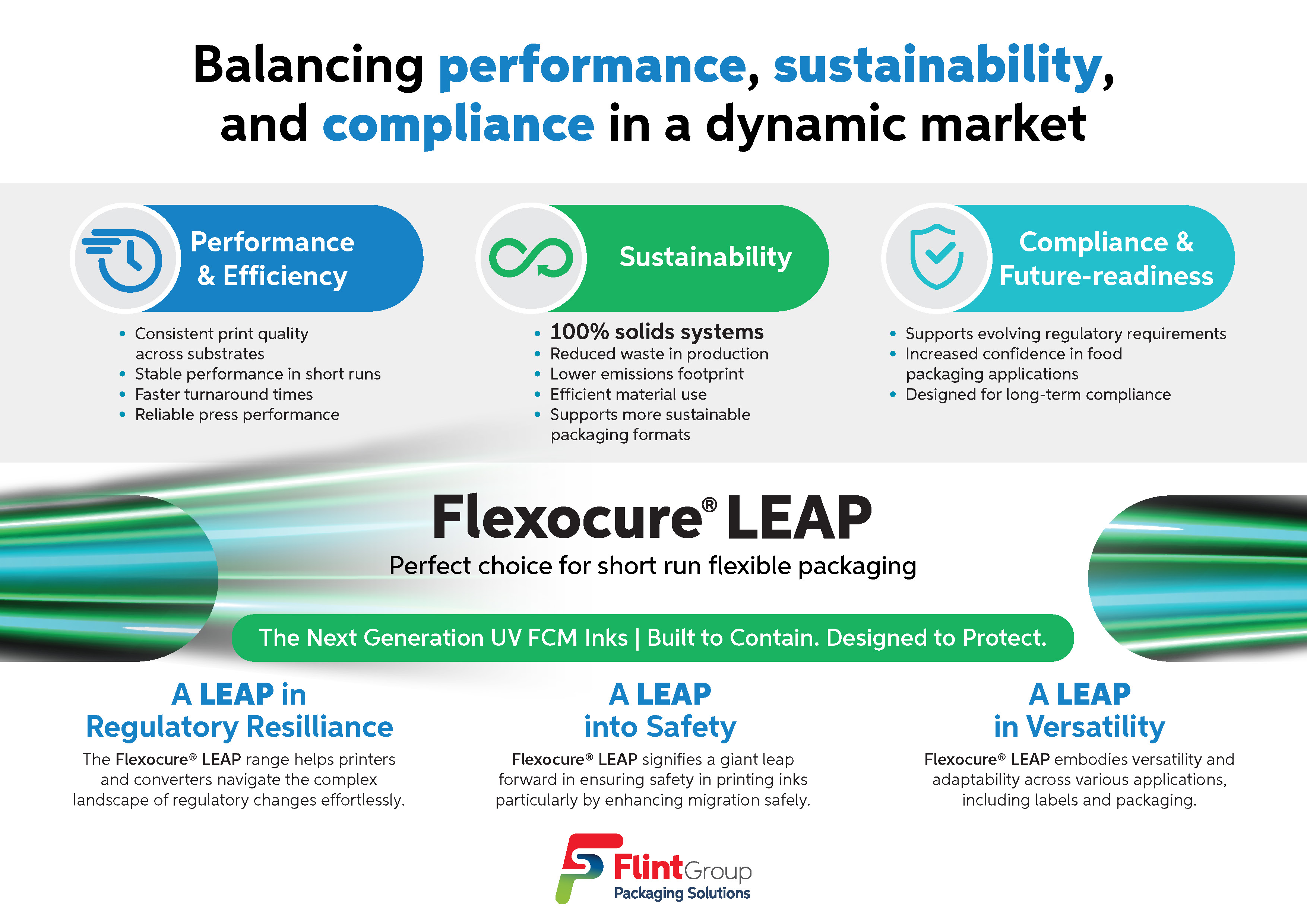
For food packaging converters seeking future-proof ink chemistry, Flexocure® LEAP provides a single UV FCM solution engineered with short-run production in mind.
This ink, based on a revolutionary resin platform, features a 100% solids and solventless design that supports reduced waste and lower emissions. Flexocure® LEAP also offers an enhanced migration safety profile by anchoring potential migrants in place, giving printers peace of mind when producing compliant food-contact packaging as regulations evolve.
As Flexocure® LEAP is formulated to align with upcoming material and regulatory changes, it offers printers stability as packaging structures evolve. Its versatility across substrates, consistent curing, strong adhesion, and colour strength all contribute to reliable performance across diverse short-run applications.
Building a future-ready short-run operation
Short-run packaging will continue to evolve as brands prioritise agility and tighter environmental standards. Converters who invest now in resilient, migration-safe, solventless technologies will be best placed to navigate the transition.
Flexocure® LEAP provides the foundation on which this change will be built. This ink system provides a future-oriented solution that strengthens both print performance and compliance. For converters looking to strengthen their short-run capabilities, it provides a confident step toward cleaner, more adaptable printing.